“But they’re just playing…” – For a child, play is much more than fun; it’s their natural language for expressing feelings and making sense of the world. When 6-year-old Aarohi began throwing tantrums after her parents’ separation, she became withdrawn and stopped talking about her emotions. Her teachers noticed she was zoning out in class. …

“But they’re just playing…” – For a child, play is much more than fun; it’s their natural language for expressing feelings and making sense of the world.
When 6-year-old Aarohi began throwing tantrums after her parents’ separation, she became withdrawn and stopped talking about her emotions. Her teachers noticed she was zoning out in class. Unsure how to help, her mother brought her to Urjasvini Child Development Centre in Indore.
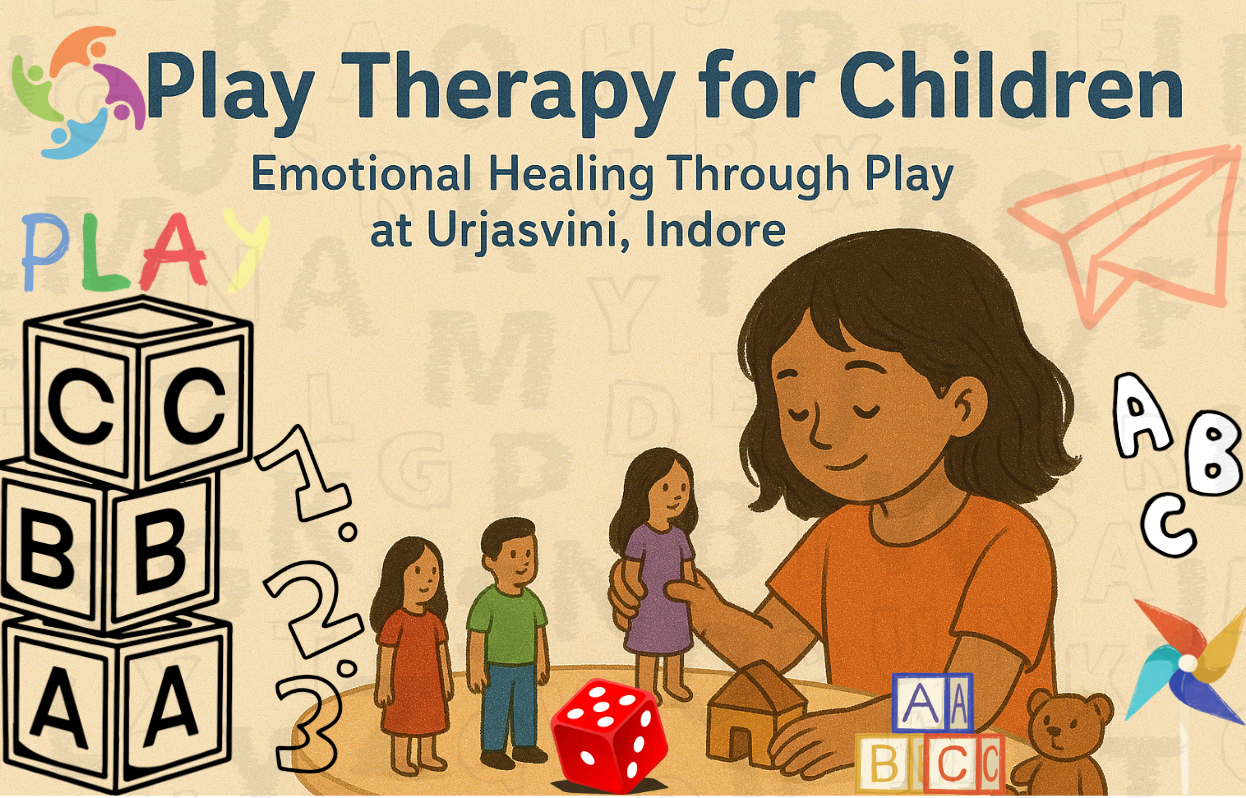
In her very first play therapy session, Aarohi was drawn to dolls and family figurines. Through stories, role-play, and creative activities, she slowly began processing her emotions — safely, at her own pace. Within weeks, she became more expressive, confident, and emotionally balanced. Her journey is a reminder: play therapy for children is not “just play” — it’s a powerful pathway to emotional healing.
What is Play Therapy?
Play Therapy is a structured, evidence-based form of child-centred therapy that uses toys, art, storytelling, and games to help children:
- Express feelings they cannot put into words
- Explore thoughts and experiences
- Process trauma, anxiety, or stress
- Develop emotional and social skills
It is especially beneficial for children aged 3 to 12, who may not yet have the verbal ability to describe their emotions fully.
Why Play Therapy Works – The Science Behind It
The brain’s emotional centres (limbic system) are highly engaged during symbolic play. Research by the Association for Play Therapy shows that children in play therapy often experience significant improvements in:
- Self-control and emotional regulation
- Mood stability
- Problem-solving skills
As child psychiatrist Dr. Daniel Siegel explains, play helps children “make sense of their internal world,” integrating experiences and emotions in a healthy way.
When to Consider Play Therapy for Your Child
You may want to explore play therapy in Indore if your child is experiencing:
- Sudden behavioural changes (withdrawal, aggression)
- Challenges due to separation, divorce, or loss
- Frequent nightmares or anxiety
- Low self-esteem or excessive guilt
- Difficulty making friends or refusing school
- Delayed emotional development
What Happens During a Play Therapy Session at Urjasvini
At Urjasvini, sessions are child-led but therapist-guided, ensuring a safe, supportive environment for emotional exploration. Our tools and techniques include:
- Dolls & Figurines: To act out family dynamics and personal stories
- Art & Drawing: To express thoughts and feelings visually
- Sand Tray & Miniatures: For metaphorical and symbolic storytelling
- Storytelling & Puppetry: To help children externalize fears or wishes
- Therapeutic Games: To develop impulse control, cooperation, and frustration tolerance
We document each session carefully to track emotional themes, progress, and resilience building.
Parent Involvement is Key
Parents are an essential part of the therapeutic process. While sessions are mostly one-on-one with the child, we provide regular progress updates and parent coaching, helping families support emotional growth at home.
How Play Therapy Supports Emotional Growth
Through emotional healing through play, children:
- Build emotional vocabulary
- Improve self-awareness and empathy
- Develop healthy coping skills
- Strengthen secure attachments
- Heal from trauma, loss, or challenging life events
At Urjasvini Child Development Centre in Indore, we believe that play is the bridge between a child’s inner world and outer reality. Our experienced therapists create a safe, nurturing space for every child to heal, grow, and thrive.
Book a Consultation
It’s easy and free!